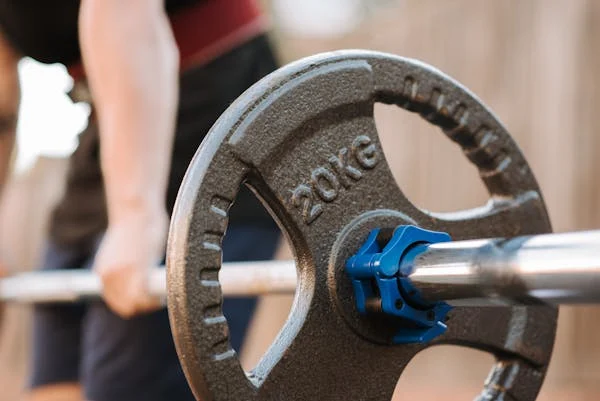
The feeling of lifting heavy weights is so empowering. It’s something that many Sweat Community members can attest to!
However, it’s important to not go in too hot and attempt to lift heavier than you can handle right now. This can compromise your form, cause you to feel too sore to keep training, and even increase your risk of injury.
Start Light
The term “heavy lifting” refers to exercise or training that uses weights that are heavier than what you would typically lift. Heavy weights may be considered anything over 200 pounds for upper body exercises and 300 pounds for lower body exercises, but these types of loads are generally only used by competitive powerlifters to improve their one-rep maximum (the maximum amount of weight you can lift for one repetition).
For most people, starting with a heavier load is a little intimidating and it’s better to start light so you can learn the movements safely, without risking injury or compromising your form. Many programs include RPE recommendations for a workout to help you determine what is an appropriate level of difficulty. It’s also important to remember that it takes time and practice to build strength and develop your skills, so don’t try to rush through the process and go too heavy right away.
If you’re new to lifting, or have never lifted before, it can take up to 12 months for your muscles and tissues to become ready for a heavly lifting workout. If you’re a brand-new exerciser, you should focus on other ways to progress your workout, such as increasing the number of sets or reps, using better form or achieving a stronger mind-muscle connection.
Warm Up
It’s no secret that a good warm up is an essential component to any workout. It increases blood flow to the muscles and joints being worked, delivering oxygen and nutrients while eliminating waste products. This helps reduce the likelihood of injuries during training, and a well-executed warm up can also improve overall performance.
The duration of a warm up varies and will depend on your goals, experience level and individual needs. However, it’s important to make it a non-negotiable part of your lifting sessions.
Start with some light cardio to get your heart rate up and body moving before moving on to a series of dynamic stretches and activation exercises for the muscles you’re about to work. Then, complete a first warm-up set – about 12 reps with 30% of the weight you will use for your real sets. For example, if you are doing your first working set with 200lbs, do your warm up with 160-170lbs.
Rest for one minute before your second warm-up set, and do about 10 reps with 50% of the weight you will use for your real working sets. Finally, do a final warm-up set for 1 rep with 90% of the weight you will be using for your real working sets. Rest for another minute before beginning your actual work sets.
Listen to Your Body
Learning to listen to your body can be a process, but it’s worth it. Not only can it prevent injury, but it will also help you find the right balance between training and rest. It will give you clues about what type of movement serves you best, what kind of intensity you can sustain for the long haul, and how much recovery time your body needs.
A few key signals to watch for include feeling dizzy, lightheaded or nauseated during or after a workout. A racing or fluttering pulse may indicate an irregular heart rhythm, which could be dangerous. If you feel chest pain, have trouble breathing or walking, or are having serious difficulty with a movement, you should seek immediate medical attention.
Another important signal is if you are feeling extremely tired after your workout. One off day in a week is okay, but multiple days of extreme fatigue are a sign that you need to slow down. This may mean lowering your weights or taking a rest day.
Ultimately, listening to your body is all about guaranteeing your fitness and health in the long term. It takes diligent practice, but it will pay off. It will allow you to find a training program that works for your unique body, so you can make the most of every exercise and reap the benefits of consistency.
Don’t Overdo It
Lifting heavy is a great way to build muscle and turbocharge your metabolism, but it’s important not to overdo it. Too much weight can compromise your form and increase your risk of injury. If you’re unsure of how much weight is appropriate for your current level of strength, start with the lowest possible number of sets and reps. It’s also a good idea to take 60 seconds of rest between each set, to allow your muscles to recover.
If you’re a beginner, try a low-to-moderate weight that feels heavy for you, but still challenges you. Using heavier weights may require more rest between sets, but you don’t want to take too long of a break because that could lead to fatigue and reduced muscular performance. You can adjust your rest times as you become more familiar with the workouts in the Sweat app, but don’t go too long between sets to avoid injury.
It’s also important to keep in mind that lifting heavy does cause microscopic tears in your muscles. This is how your muscles get bigger and stronger, but overdoing it can damage your joints and back and prevent your muscles from being able to repair those tiny tears. It’s also important to take a day off from lifting between workouts, so your body can recover and heal.
Featured Image Source: https://images.pexels.com/photos/4793248/pexels-photo-4793248.jpeg?auto=compress&cs=tinysrgb&w=600
